
The BoJ just hiked to 1.0%. Why is the Japanese Yen still falling?
The Japanese Yen (JPY) remains under pressure despite the Bank of Japan’s latest rate hike, with analysts highlighting that the move has not been enough to trigger a sustained recovery for the Japanese currency. Societe Generale sees short USD/JPY as attractive if the Federal Reserve delivers a dovish outcome, while OCBC argues that the BoJ’s cautious tightening path limits near-term support for the Yen and keeps intervention risk in focus.
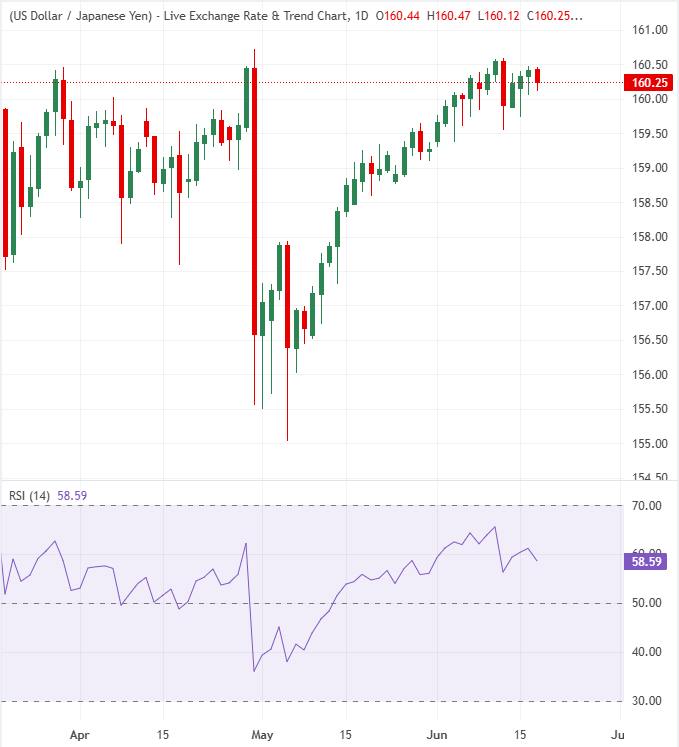
Societe Generale sees short USD/JPY as a dovish Fed trade
Societe Generale argues that recent G10 central bank decisions, including the BoJ hike, have not caused major FX moves. For USD/JPY, the key trigger may now come from the Federal Reserve rather than the BoJ.
The implication is that the Yen could benefit if the Fed sounds more cautious on rates, as a dovish US outlook would reduce support for the US Dollar. In that scenario, USD/JPY could become vulnerable to downside pressure, especially after trading at elevated levels.
Short USD/JPY and short USD/SEK should deliver results in the event of a dovish outcome; further EUR weakness would follow on from any hawkish surprises.
OCBC says BoJ caution limits near-term Yen support
OCBC notes that the BoJ’s 25 basis points hike to 1.0% was widely expected and failed to provide strong support for the Japanese Yen. While the policy bias still points toward further hikes, the central bank has not signaled a faster tightening cycle.
Analysts suggests that the Yen may struggle to gain sustained traction unless the BoJ becomes more clearly hawkish. With Japan still offering the lowest real rate among G10 economies, JPY remains attractive as a funding currency, which can cap rallies even after rate hikes.
Policy bias remains for further hikes, but there is no signal of an accelerated tightening path. This limits near-term support for the JPY. Despite policy rate at 30-year highs, Japan still has the lowest real rate in the G10.
Banks agree Yen needs a stronger catalyst
Both banks suggest that the Japanese Yen’s next major move depends on whether policy expectations shift more decisively. Societe Generale focuses on the Fed side, arguing that a dovish US outcome could support short USD/JPY positions. OCBC focuses on the BoJ side, warning that cautious tightening is not enough.
(This article was created with the help of an Artificial Intelligence tool and reviewed by an editor.)